
THE BRIGADE: ITS ORIGINS
What would become Brigade 2506 has its roots in the experiences and ideals of a group of young Cuban men. Their average age was twenty-two when Fidel Castro came to power in 1959. Many were university students or recent graduates in medicine, law, or engineering. Others were former junior officers or pilots of Cuba’s regular army, or disaffected members of Castro’s Rebel Army.
We are freedom loving, Cuban patriots from all walks of life. A blend of farmers, lawyers, barbers, doctors, the occasional actor, a calculated engineer, a reassuring priest – a variety of the populace that make up a functional, respectful, civilized society. We are the Assault Brigade 2506 – we are FREEDOM FIGHTERS. Today we remain approximately 200 of the original 1,414 brave hearts whose story, against all odds, is nothing short of spectacular.
The Assault Brigade 2506 takes root from a resolute, collaborative effort put forth in 1959 by a determined U.S. President Dwight D. Eisenhower and the Central Intelligence Agency (CIA) to rid the region of the Soviet-Communist foothold embraced by Fidel Castro’s Cuba.
Young professionals and university students were among the first to realize Castro’s true designs to turn Cuba into a communist state under the tutelage of the Soviet Union. One of the early leaders of this group was Manuel Artime, a devout Catholic and medical doctor who had joined Castro’s rebel guerrillas in the Sierra Maestra mountains in 1958. After the triumph of the revolution, he led a national literacy campaign concentrated in rural areas of Cuba, but he soon became aware of Castro’s dictatorial, Marxist designs; he resigned and left the island. In Miami he created the Revolutionary Recovery Movement (MRR), which—along with other groups forming the Cuban Revolutionary Front (FRC)—would play a determining role in the motivation, recruiting, mission, and ideals of what would later be Brigade 2506, with Manuel Artime as its civil leader.
Despite their different backgrounds, these young men shared a common desire: to live freely, build families, and prosper under a stable democratic system that respected private property, human rights, and justice. Like most of the Cuban population, the future members of Brigade 2506 believed this was what they would achieve with the defeat of Batista’s dictatorship and the arrival of Castro’s revolution.
Through late 1959, none of these groups of young men were thinking of integrating a conventional military force that would land in Cuba and overwhelm the more than 200,000 regular army troops and militias under Castro. Rather, they were occupied with organizing and obtaining resources to support the fledgling opposition movements developing in Cuba’s rural and urban population centers.
This all changed in early 1960, when the Eisenhower administration concluded that the Castro regime was intensifying its destabilizing interventions across the Caribbean and Latin America while increasing its reliance on the Soviet Union and other U.S. adversaries. In response, President Eisenhower ordered the CIA to prepare a plan to increase the internal opposition to Castro with the objective of overthrowing his government.
According to U.S. Marine Corps Colonel Jack Hawkins, who became chief of the paramilitary staff of the plan developed by the CIA, known as the Cuba Project, the plan consisted of “organizing Cuban exiles into paramilitary agent teams for covert entry into Cuba where they would commence intelligence, propaganda, political action, sabotage, and guerrilla-warfare activities.” These teams were to be complemented by a “small infantry force of up to 300 men to augment and control guerrilla activity in promising areas.”
On March 17, 1960, President Eisenhower was presented with, and approved, a Cuba Project that included the following actions:
- The recruitment, organization, and training of several Cuban paramilitary agent teams, including radio operators and personnel for the development of intelligence, sabotage, propaganda, political and guerrilla activities within Cuba.
- Introduction of the paramilitary agent teams into Cuba by clandestine or legal means.
- Development, within Cuba, through the medium of the infiltrated agents, of a large-scale resistance movement.
- Organization and training of a Cuban air-transport unit for use in supply overflights and other air operations.
- Supply of military arms and equipment to guerrilla and other resistance organizations by air drop or maritime delivery.
- Organization and training of a Cuban tactical air force equipped with B-26 light bombers.
- Forming a small infantry force (200 to 300 men) for contingency employment in conjunction with other paramilitary operations.
Thirteen months later, out of successive modifications of the above plan, a force of 1,500 young Cuban patriots, called Brigada 2506, would fight at the Bay of Pigs.
The effort was originally coded Operation Pluto, later renamed Operation Zapata and is infamously known as the Bay of Pigs. The CIA was bestowed one of its most ambitious, dramatic, covert missions that was to change modern history forever. And so it did…
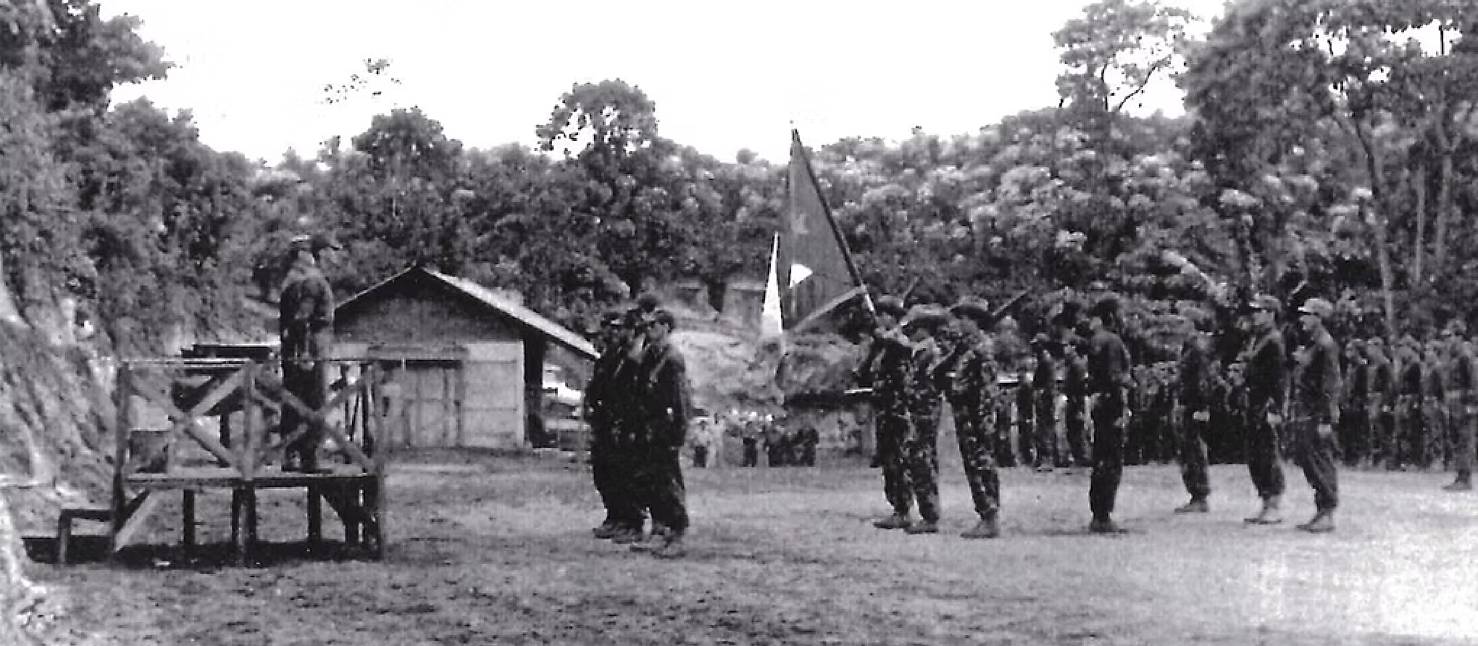
Originally crafted as a small expeditionary force, we grew into a determined, full fledged, highly skilled, formidable Assault Brigade. We trained tirelessly under rigorous conditions with elite U.S. Special Forces by ways of Useppa Island – FL, Guatemala, Panama, Puerto Rico and Nicaragua. The average age of the members of Brigade 2506 was 24 years. The eldest, a 54 year old highly decorated WWII U.S Army Cuban-born paratrooper and the youngest, a passionate 15 year old student who forged his papers to join the cause.
We firmly committed to our mission in January 1960 and gallantly unwavered on the battlefield through April 1961. Incoming President John F. Kennedy through a series of political, tactical and operational lapses rendered the mission ineffectual and ultimately expended us, as well as several fearless pilots of his own U.S. Alabama Air National Guard. This, we will never forget.
We call ourselves brothers and indeed we are. The principles that led us to fight against tyranny and oppression and seeking liberty for Cuba are embedded in us and may our legacy remain such.
Our devotion, courage, and selflessness resonate to this day. An alliance born of common cause, forged in spirit—what should have been, never was, but will be.
Assault Brigade 2506

The Bay of Pigs Museum and Library is a non-profit organization and operates with the support of the Miami-Dade County Department of Cultural Affairs and the Cultural Affairs Council, the Miami-Dade County Mayor and Board of County Commissioners. It is also sponsored in part by the State of Florida, Department of State, Division of Arts and Culture, the Florida Council on Arts and Culture, and the National Endowment for the Arts.